Heating bills in Kazakhstan keep rising, and winters in Astana, Karaganda or Pavlodar are not getting any milder. Owners of offices, warehouses, schools and private homes are increasingly thinking about insulation. But the key question is not "what to insulate with" but "what exactly to insulate and will it pay back". An energy audit provides the answer: without one, it is easy to spend millions of tenge on the façade while most of the heat escapes through the roof or the ventilation.
What an energy audit shows
An energy survey is an instrument-based inspection of the building combined with an analysis of its consumption over several years. It usually includes:
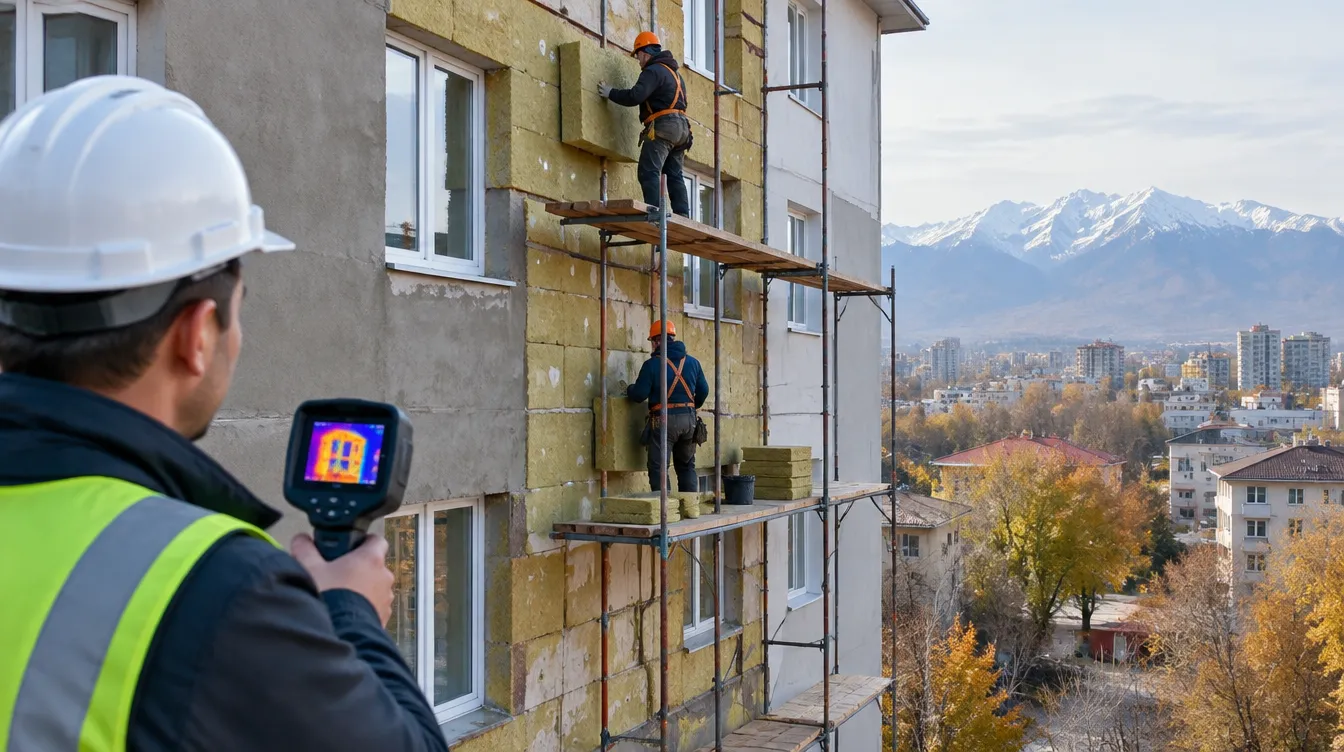
- thermal imaging of façades, roof, windows and junctions — revealing thermal bridges, freezing joints and window installation defects;
- analysis of bills for heat, gas and electricity correlated with outdoor air temperature;
- inspection of the heating system — balancing, the condition of the heat substation and the performance of controls;
- ventilation assessment — how much heat is lost with extract air;
- a survey of lighting and major electrical loads.
The result is a report listing measures, the cost of each, the expected savings and the payback period. It lets you set priorities and avoid unnecessary work.
Where the heat goes
In a typical older building, losses break down roughly as follows: walls 25–35%, windows and doors 20–30%, roof and attic floor 15–25%, floor and basement up to 10%, ventilation and infiltration 20–30%. The figures depend heavily on the construction: a 1980s panel block and a brick building with thin walls look quite different. That is exactly why off-the-shelf recipes do not work.
What pays back fastest
- Heating balancing and controls. Weather-compensated control, balancing valves and thermostats are relatively inexpensive and often deliver 10–20% heat savings. Payback is 1–3 years.
- Insulating the attic floor or roof. The work is done without scaffolding, little material is needed and the effect is felt immediately. Payback is usually 2–5 years.
- Sealing and replacing windows. Especially where windows are timber or were installed incorrectly. Sometimes redoing the installation joint and reveals is enough.
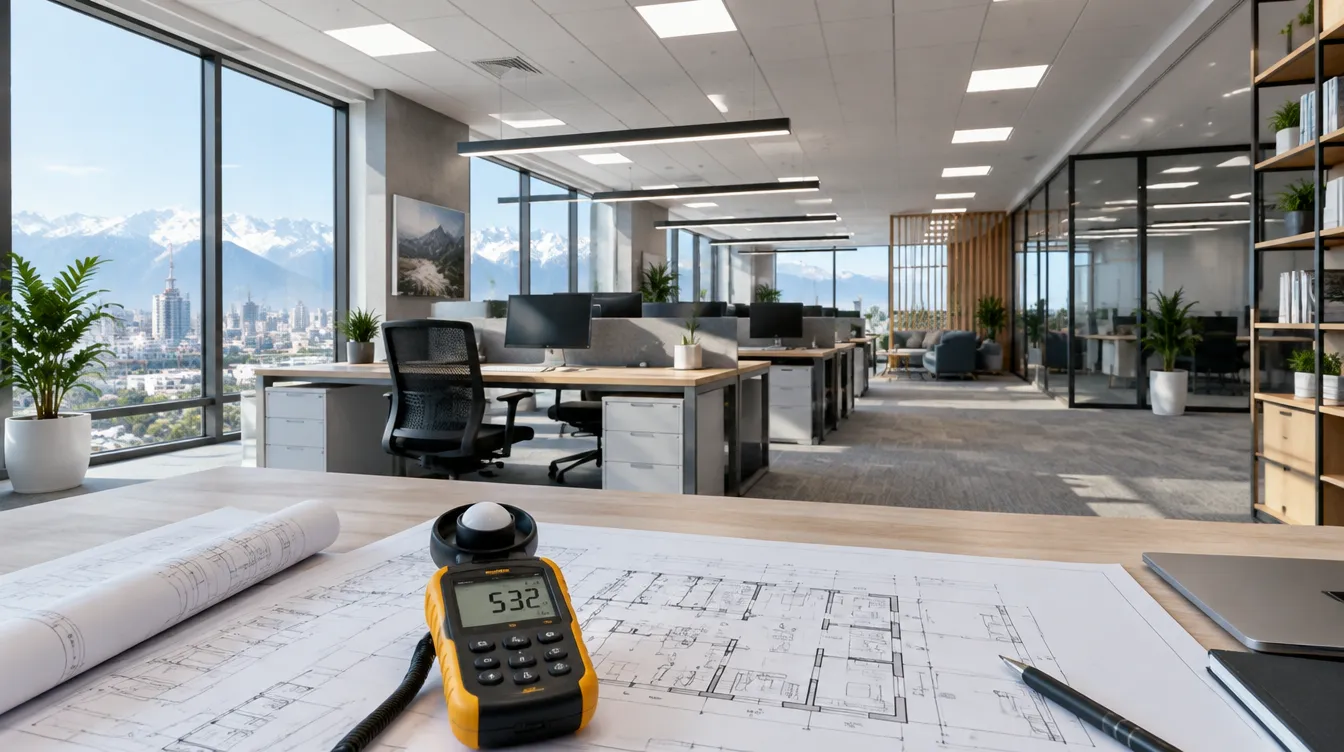
- LED lighting with sensors. For warehouses and production facilities this is one of the quickest projects. You can work out the number of fittings needed in our lighting calculator.
What about the façade?
Façade insulation is the most visible and the most expensive measure. It takes longer to pay back: on average 5–10 years or more, depending on wall area, tariffs and the starting condition. But it has additional benefits that do not show up in a payback calculation:
- cold corners, condensation and mould inside the rooms disappear;
- load-bearing walls are protected from freeze–thaw cycles, so the building lasts longer;
- the façade gets a new look, which matters for commercial property;
- the capacity of heating equipment can be reduced when it is replaced.
The main systems are the "wet" façade (mineral wool board or expanded polystyrene with a thin render) and the rainscreen ventilated façade with cladding. The first is cheaper; the second is more durable and better suited to commercial buildings. For buildings with stricter fire safety requirements the choice of insulation is limited — this is determined by the design.
Insulating the façade without sorting out the heating is like buying a fur coat and leaving the window open: the building starts to overheat and the savings go out through open windows.
Mistakes that eat up savings
- insulating without a design — wrong thickness, dew point inside the wall, wet insulation;
- uninsulated reveals, plinth and balcony junctions — the thermal bridges remain;
- cheap adhesives and anchors, with the system delaminating after 3–4 years;
- working in sub-zero temperatures without following the proper technique.
How to estimate payback yourself
For a first estimate a simple formula is enough: the cost of the measure divided by the annual saving in tenge. The saving is taken from the energy audit report — as a percentage of current heat or electricity consumption — and multiplied by the annual spend on bills. For example, if a building spends 12 million tenge a year on heating and roof insulation cuts consumption by 12%, the saving will be about 1.4 million tenge a year. With works costing 5 million tenge, the payback period is roughly 3.5 years.
Bear two things in mind. First, tariffs rise, so the real payback is usually shorter than calculated. Second, the effects of different measures do not add up arithmetically: after the walls are insulated, the percentage saving from new windows will be smaller than if the windows had been replaced first. That is why a comprehensive plan is best left to specialists who model the building as a whole.
How we work
Techno-Module carries out energy surveys, develops the insulation design and delivers it on a turnkey basis — with scaffolding, our own equipment and technical oversight. You can estimate the budget in our cost calculator and see examples of reconstruction projects in the Projects section.
Request an energy audit and we will show you where your building is losing heat and propose an action plan with clear payback periods.